Use a MEMIST Capability from the AI tool you already work in.
Set up a package, authorize a Capability, call it from your harness and see the attributed execution in MEMIST. The screens below are illustrative and use a fictional customer.
From a package to an attributed run
Set up a package
PreviewPick the package for the team's job and finish its setup, so the Capabilities it contains and the connections they need are in place. The Sales and Account Management package is a Preview today.
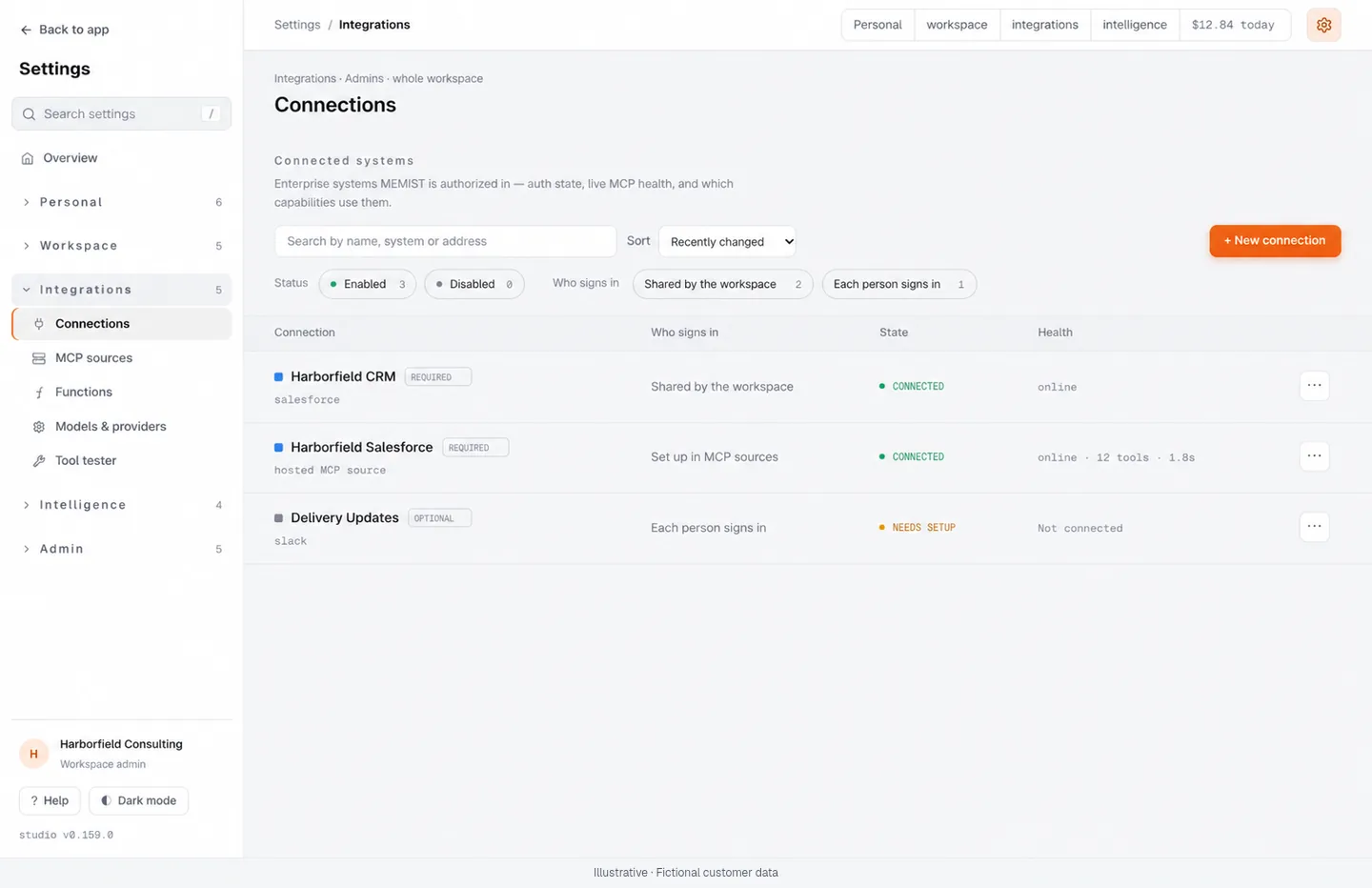
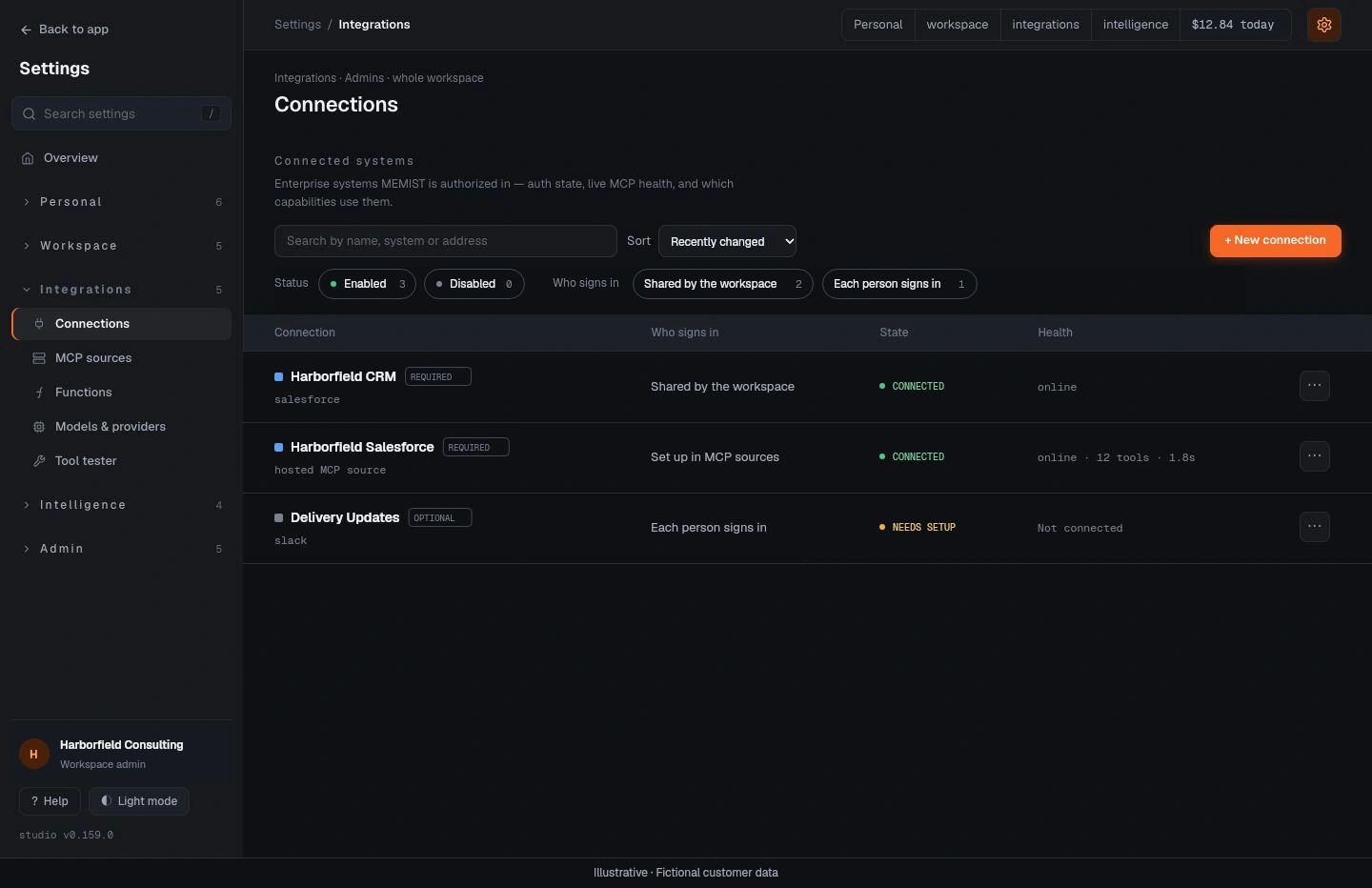
Illustrative · Fictional customer dataRequired connections ready; the optional one waiting. Expose and authorize a Capability
AvailableChoose which Capabilities a harness may call, and for whom. Each call runs as a real person or service identity, so what one caller may do is decided on the server and not by the tool it came from.
Illustrative · Fictional customer dataConnecting a harness to the permitted MEMIST tools. Invoke it from your harness
AvailableIn Claude Code, or any client that speaks MCP, ask for the work. The result comes back in the harness, together with a reference to the recorded run.
Illustrative · Fictional customer dataA Daily Project Team Summary called from Claude Code, with the run reference returned. See the attributed execution in MEMIST
AvailableThe same run appears in MEMIST against its Project: its outcome, tokens, duration and recorded cost. It is the same record whether the person started it in a harness or in the app.
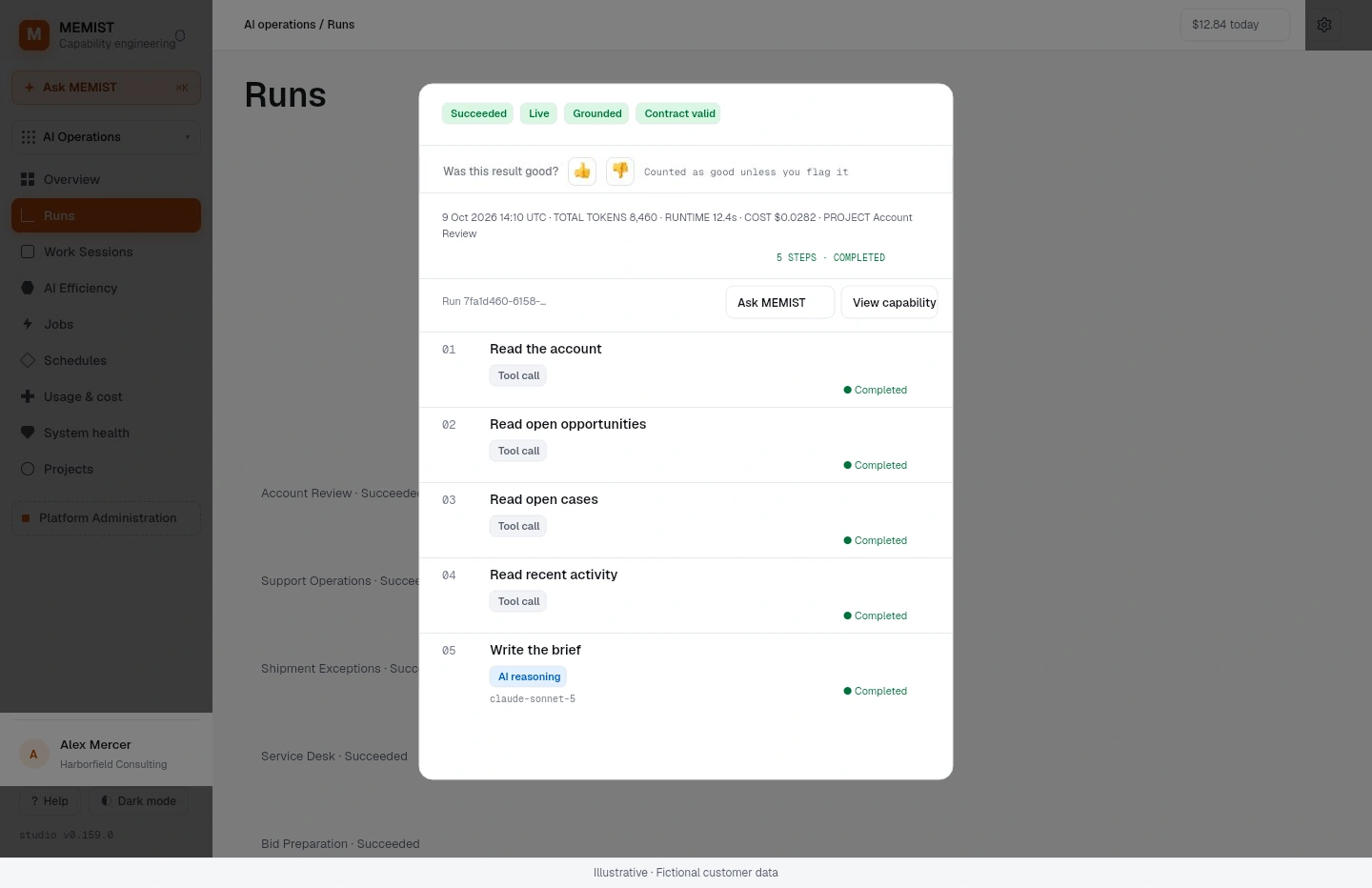
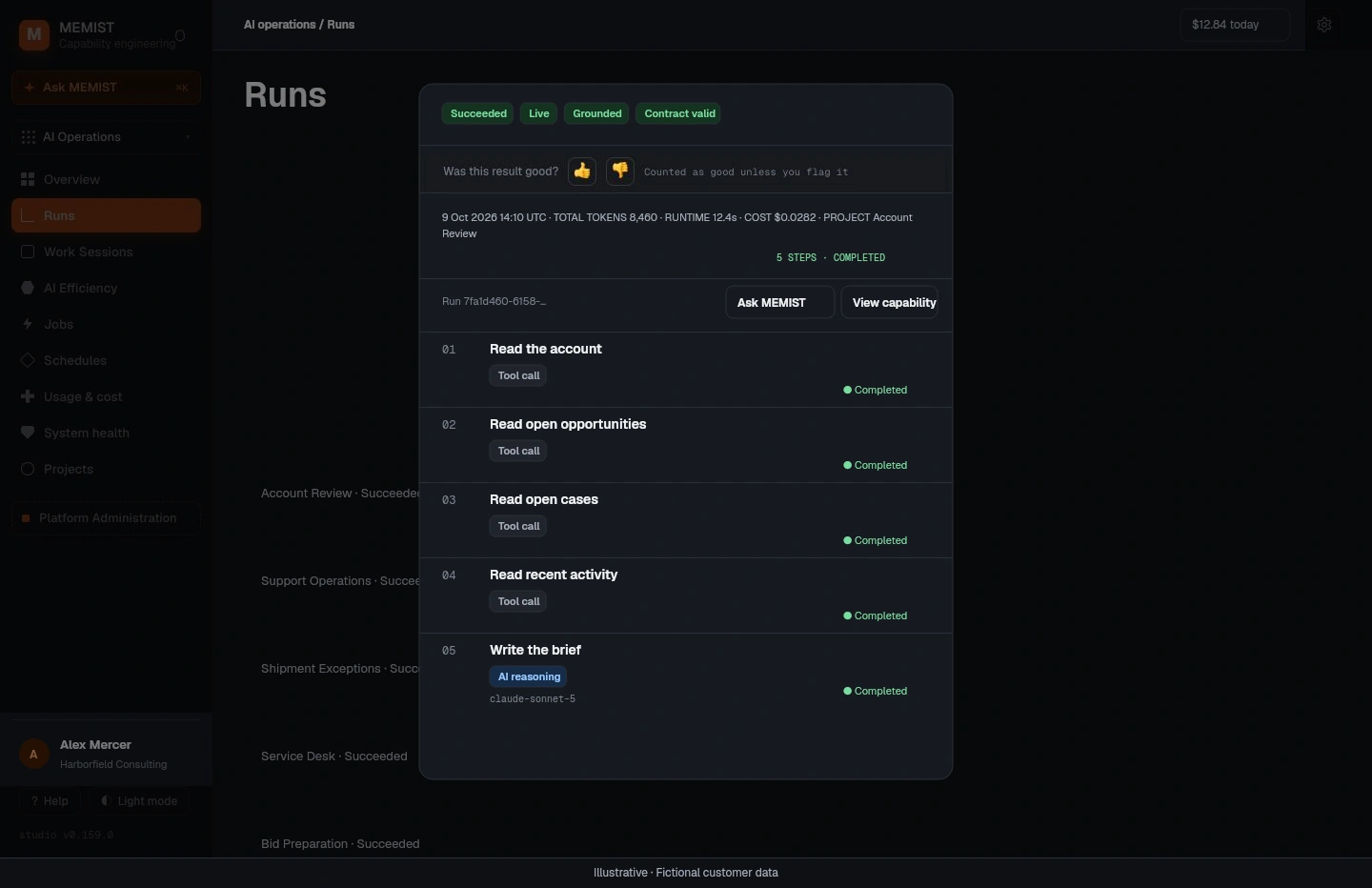
Illustrative · Fictional customer dataA recorded execution (the briefing run from the homepage walkthrough).


One shared implementation behind every caller
One implementation, many callers
A Capability is maintained once. Claude Code, another MCP client, the REST API and the MEMIST app all reach the same version, so an improvement reaches every caller.
The method stays protected
A caller receives the permitted result. It does not receive the proprietary instructions inside the Capability. MEMIST protects against easy copying; it does not promise that a process can never be inferred.
Permission for one operation
Access is granted per Capability and per invocation, rather than as broad access to a system. A write step still stops for a named human decision.
Your choice of model provider
The business operation does not change when you change the model provider underneath it.
What is supported today
MEMIST is not another coding harness. It is told about, and controls, the work a harness asks of it; it does not sit in the model-call path of your developers.
- AvailableClaude CodeNative Skill adapter, plus access over MCP.
- AvailableCodexNative Skill adapter, plus access over MCP.
- AvailableOther MCP-capable clientsReach the same governed surface over MCP; the experience is not identical everywhere.
When a call does not work
Why did this run fail and what needs fixing?
The run failed when the Salesforce account read was denied. Check the connected account's read permission, reauthorize if required, then start a new run. No output or successful retry is claimed.
Bring one team workflow to a session.
We will show it called from the harness your team already uses and recorded in MEMIST.